Upcycled material textile fashion stands at a fascinating crossroads between resource scarcity and creative ingenuity. Instead of discarding flawed or worn-out clothing items, contemporary makers and independent designers choose to deconstruct and rebuild them into entirely new garments. This practice transforms deadstock, manufacturing offcuts, and damaged pieces into bespoke creations with distinct character. Rather than buying brand new items, consumers increasingly appreciate the visible craftsmanship and narrative woven into these altered fabrics. By examining how creators handle these materials, we gain a clearer picture of modern wardrobe curation and textile management.
What Is Upcycled Material Textile Fashion?
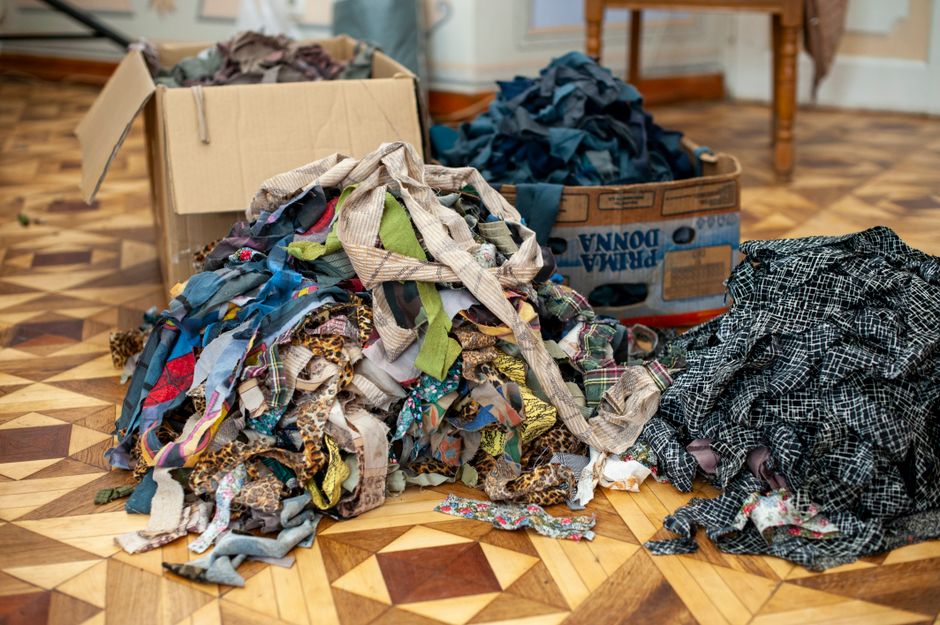
Upcycled material textile fashion is the process of converting discarded textiles, deadstock fabric rolls, or unwanted garments into new, high-value clothing items without breaking them down chemically. This design method differs significantly from traditional mechanical or chemical recycling, which shreds or dissolves fibres to create new yarn. It also separates itself from mere secondhand resale, because the garments undergo intentional structural alterations, creative patchwork, or tailoring. Independent makers across the UK look closely at how textile sourcing shifts influence their ability to secure reliable deadstock and factory scraps for these innovative projects.
To understand the mechanics of this movement, we must first look at how designers handle raw inputs. Unlike standard manufacturing, where identical rolls of fabric arrive neatly packaged from mills, upcycling requires sorting through irregular bundles of surplus inventory. Makers often work with factory offcuts that would otherwise head straight to local landfills or incineration facilities. This hands-on method demands patience, as every single panel of fabric must be inspected for wear, structural weakness, or discoloration before any cutting begins. When dealing with damaged garments, tailors must creatively patch, splice, or overlay panels to hide flaws while simultaneously building a visually compelling aesthetic.
It is important to remember that this creative approach is not a miraculous cure-all for the wider environmental impact of the clothing industry. Many casual observers mistakenly assume that any garment labelled as reworked automatically carries a near-zero carbon footprint. In reality, the labour-intensive nature of manual unpicking, washing, redesigning, and sewing means that time and energy inputs remain very high. According to findings by the Waste and Resources Action Programme, sustainable material innovations require careful scrutiny regarding their actual processing footprints (WRAP, 2021). Transporting odd lots of surplus fabrics across different regions also adds logistical emissions that challenge simplistic low-impact assumptions.
Furthermore, the British Fashion Council has continually emphasised that scaling these artisanal methods presents a unique set of logistical challenges for the commercial sector (BFC, 2022). While a solo studio can meticulously dismantle a dozen wool coats to craft a patchwork jacket, a larger commercial brand struggles to replicate that exact workflow at scale. Mass production relies on predictability and uniformity, whereas repurposed garment design thrives on uniqueness and irregularity. Consequently, much of this work remains within the realm of independent studios, small ateliers, and bespoke capsule collections rather than high-street volume production.
True resourcefulness in design is not merely about finding a clever use for waste, but about respecting the immense human and environmental labour embedded in every thread from the very beginning.
The daily reality of running a studio focused on repurposed garments involves meticulous organization and physical problem-solving. Makers must manage chaotic inventory streams where no two batches of raw materials look alike. This calls for adaptable patterns that can be scaled up or down depending on the exact dimensions of available offcuts. Designers often rely on a specific set of habits to keep their production workflows efficient and inspiring:
- Sorting incoming deadstock by fabric weight and fibre content before sketching new designs
- Inspecting vintage seams and structural linings for hidden wear and tear
- Utilising small scraps for pocket linings, collars, and decorative binding
- Collaborating with regional textile mills to capture clean manufacturing waste
Consumer perception also plays a major role in how these garments are received and valued in the marketplace. Buyers accustomed to uniform department store sizing must learn to embrace slight asymmetries, varied dye lots, and visible mending as marks of authenticity. This shift in mindset encourages people to view clothing as a living history rather than a disposable commodity. When individuals wear a coat patched together from historical military blankets or industrial surplus, they become walking participants in a slower, more thoughtful system of personal expression.
Ultimately, the future of this craft depends on striking a balance between creative ambition and practical manufacturing realities. As industry guidelines evolve, designers and buyers alike must remain clear-eyed about what circular practices can and cannot achieve on their own. By acknowledging that labour, transport, and processing scale still matter, the community can move past superficial greenwashing. Upcycled apparel remains a powerful tool for artistic expression and material diversion, provided we approach it with rigorous honesty, respect for craft, and a clear understanding of its true footprint.
References
British Fashion Council (BFC), 2022. Circularity and Design Innovation in the UK Fashion Sector. London: BFC Research publications.
Waste and Resources Action Programme (WRAP), 2021. Textiles Market Situation Report: Assessing Material Flows and Circular Opportunities. Banbury: WRAP.