

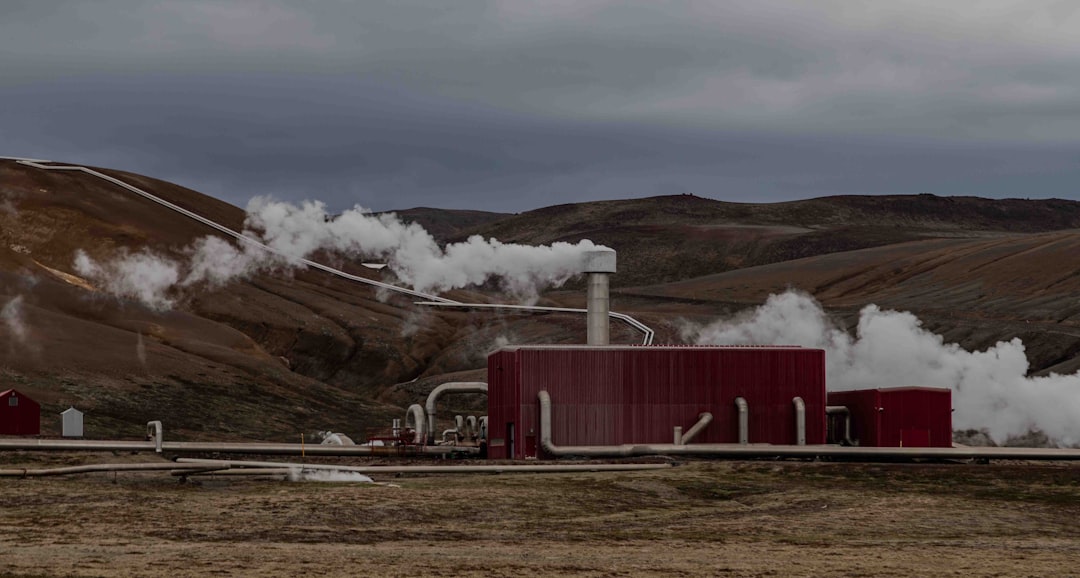

Geothermal and ground-source heating can play a role in local energy systems, but the technology needs to be matched carefully to geology, building demand and existing infrastructure. There is no single deep-loop design that automatically delivers the same efficiency in every town.
Start with the ground, not the equipment
Before drilling or specifying a heat network, developers need a reliable picture of local geology, groundwater conditions, available land and expected heat demand. Shallow ground-source heat pumps, mine-water systems and deeper geothermal schemes work in very different ways and should not be treated as interchangeable.
How a district system can work
A heat network may use boreholes, groundwater, mine water or deeper geothermal resources as a heat source. Heat pumps can then raise the temperature to a useful level before heat is distributed to connected buildings.
In some projects, a shared network allows several buildings to use one larger source rather than installing separate systems. The design has to account for flow rates, seasonal demand, backup capacity and the temperature requirements of the buildings being served.
Engineering risk needs site-specific assessment
Claims such as a universal 45% efficiency improvement or fixed pressure ratios are misleading without a documented project and engineering context. Borehole depth, fluid pressure, heat-pump performance, groundwater protection and drilling methods all need professional design.
Automated valves and monitoring can help operators detect abnormal pressure or flow, but they do not provide a universal percentage reduction in leakage. Instrumentation is part of a wider maintenance and safety system.
Where geothermal makes sense
Projects are most attractive where there is a useful local heat resource, concentrated demand and a long-term plan for buildings and infrastructure. Existing mine workings can also create opportunities in parts of Britain where warm mine water is accessible.
The economics vary substantially. Drilling can be expensive and uncertain, while heat networks require long-lived infrastructure and enough connected customers to justify the investment.
A planning tool, not a universal solution
Geothermal heating is best understood as one option within a broader local-energy strategy. In the right location it can provide dependable low-carbon heat; in another location, building insulation, air-source heat pumps or a different heat-network source may be more practical.
For town planners, the useful first step is therefore feasibility work based on local geology and heat demand rather than selecting a technology in advance.