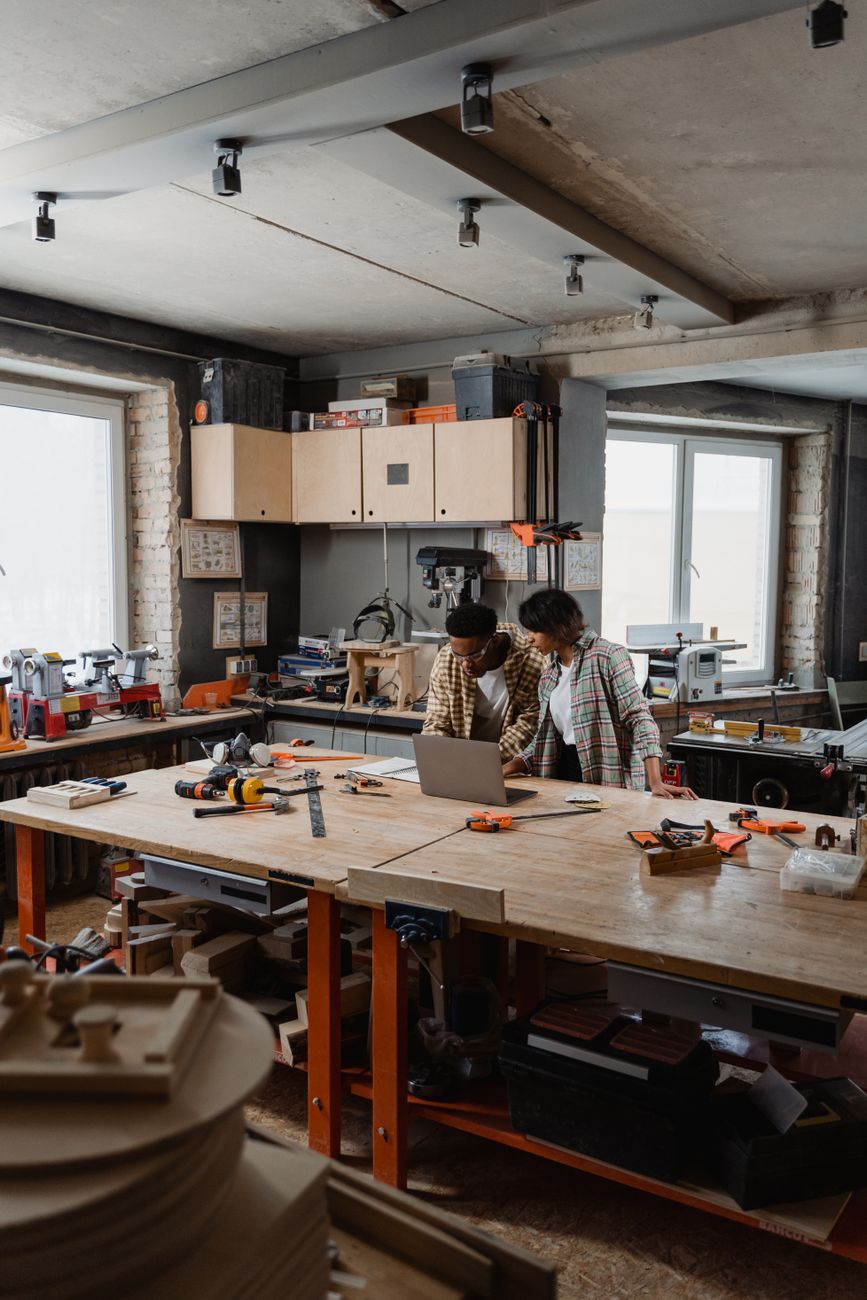

Across Britain, a quiet revolution is taking place in converted warehouses, community centres and disused high-street shops. Independent artists, designers and makers who once worked in isolation are pooling resources to create shared workshops — places where tools, knowledge and inspiration circulate freely.
These makerspaces are not simply cheaper alternatives to private studios. They function as informal training grounds, informal networks and, increasingly, as small-scale economic engines for local creative economies.
Why Shared Space Matters Now
Rising commercial rents in cities such as London, Manchester and Bristol have made dedicated studios unaffordable for many early-career practitioners. At the same time, the cost of specialist equipment — laser cutters, ceramic kilns, professional printing presses — has remained high. Shared workshops solve both problems at once.
A typical arrangement might include a monthly membership fee that grants access to bench space, basic tools and a booking system for higher-value machines. Some spaces operate on a pure co-operative model; others are run by local authorities or arts charities with modest subsidies.
Practical Models That Work
Successful UK makerspaces tend to share several characteristics:
- Clear membership tiers — day passes for occasional users, monthly subscriptions for regulars, and occasional project-based access for larger commissions.
- Skill-sharing sessions — short peer-led workshops that keep knowledge circulating and reduce reliance on external tutors.
- Transparent tool booking — digital calendars or simple paper systems that prevent conflict over popular equipment.
- Insurance and safety protocols — public liability cover and documented induction processes protect both members and organisers.
In places such as Sheffield’s Access Space or the makerspaces linked to Creative Scotland programmes, these structures have proved durable even through periods of funding uncertainty.
Legal and Administrative Essentials
Anyone considering starting or joining a shared workshop should pay attention to a few practical points. First, the legal structure: many groups begin as unincorporated associations and later move to community interest companies (CICs) once income and liability grow. Second, health and safety documentation must be kept current — especially where power tools or chemical processes are involved. Third, data protection rules apply if the space collects member contact details or runs an online booking system.
Local authority planning departments sometimes offer advice on change-of-use applications for former retail or light-industrial premises. Arts Council England and regional development agencies periodically open small capital grants for equipment purchases that benefit multiple users.
Beyond the Tools
The most valuable aspect of shared workshops is rarely the machinery. It is the informal exchange that happens when a printmaker shows a jewellery designer a new finishing technique, or when a textile artist and a woodworker discover a joint commission opportunity. These encounters rarely appear in business plans, yet they form the real infrastructure of independent creative practice in Britain today.
For artists who prefer solitude, shared space is not the answer. For those who recognise that creative work thrives on conversation as much as on concentration, the growing network of UK makerspaces offers a practical and increasingly sophisticated alternative to working alone.