


The Smithsonian’s National Air and Space Museum is celebrating its 50th anniversary with a truly expansive exhibition. It highlights the incredible intersection where art meets space exploration, showcasing how human creativity has always been integral to our cosmic journey.
The Human Imagination’s Journey to the Stars
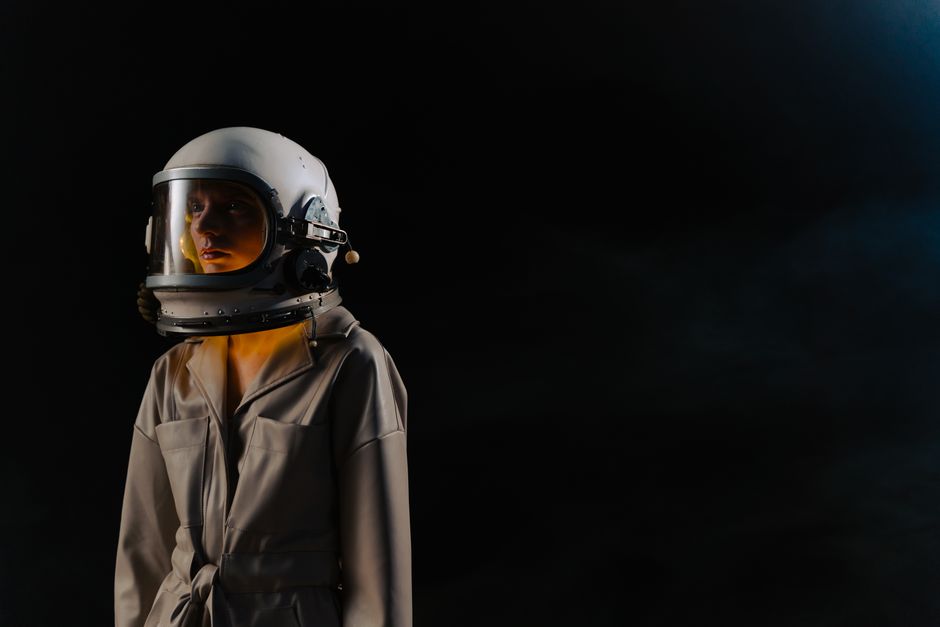
Think back to 1961. A shining silver spacesuit, an archetypal American hero: Alan Shepard. This striking portrait by Bruce Stevenson, depicting the first US astronaut in space, wasn’t just a tribute; it planted a powerful seed.
James Webb, then the administrator of NASA, saw the painting and felt an immediate inspiration. He believed that artists possessed a unique ability to explore the cosmos from a perspective science alone couldn’t capture, leading him to launch NASA’s own art program.
Nurturing Creative Exploration
This groundbreaking program, led by James Dean from 1962 to 1974, brought artists into the very heart of space exploration. It allowed them to interpret the awe, the struggle, and the triumph in ways that resonated deeply with the public. This blend of science and art underscores the value of distinct creative voices, a principle many freelance creatives champion today.
Dean’s journey didn’t end there; he went on to become the first art curator at the Smithsonian National Air and Space Museum in Washington. His work helped cement the idea that the “flight originated from the imagination” long before it took physical form.
Capturing Unique Perspectives
Art offers a lens unlike any other, allowing us to see familiar subjects in entirely new ways. Whether it’s the vastness of space or the intricate details of life on Earth, artists excel at capturing unique images that provoke thought and emotion. It’s about more than just documentation; it’s about interpretation.
Cultivating Your Creative Universe
For independent artists, designers, or consultants, drawing inspiration from diverse fields is crucial. Consider how the NASA art program merged distinct disciplines. Here are three actionable steps to integrate this philosophy into your own work:
- Explore unexpected sources for ideas. Look outside your usual comfort zone—perhaps a science documentary or an architectural exhibit—to spark fresh thinking.
- Collaborate with someone from a different background. A fresh pair of eyes, especially from another industry, can offer invaluable insights into your projects.
- Document your creative process. Like the artists capturing space travel, chronicle your journey. This not only builds a portfolio but also reveals patterns in your approach.
The Enduring Power of Artistic Interpretation
The Smithsonian’s exhibition reminds us that the human spirit’s desire to understand and portray the unknown is timeless. From painters to graphic designers, every creative individual contributes to our collective understanding of the world, and indeed, the universe.
How might your own creative work continue to expand our horizons and inspire new ways of seeing what’s possible?